Most outages begin with a change. BehMon keeps the previous version, shows exactly what changed, and won't push a sensitive change without a second person's approval.
Device configurations are fetched regularly over SSH or Telnet and versioned.
Diff any version against the previous one, and restore
A fleet-wide backup-changes view
Mirroring to S3/MinIO to keep copies off the server
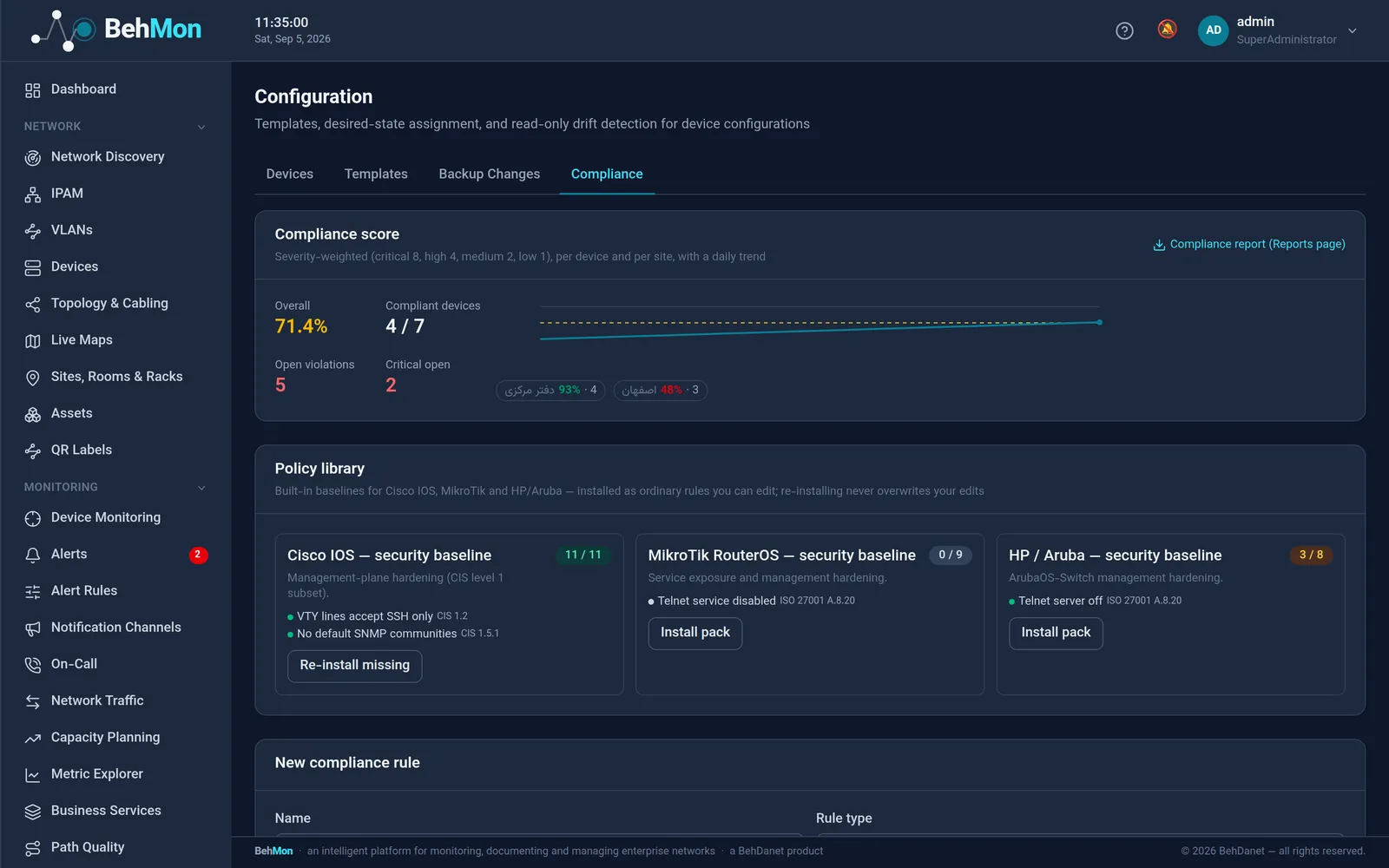
Compliance and drift detection
Define must-contain and must-not-contain rules and every configuration is re-checked after every change.
Ready-made baselines for Cisco IOS, MikroTik RouterOS and HP/Aruba
Compliance score per device and per site, with a daily trend
Violations stay open as records until they're fixed
Four-eyes change approval
A change is proposed, its command text frozen, approved by a different user, then applied.
The proposer can never approve their own change
The full device transcript is recorded when it's applied
An immediate drift and compliance check right after
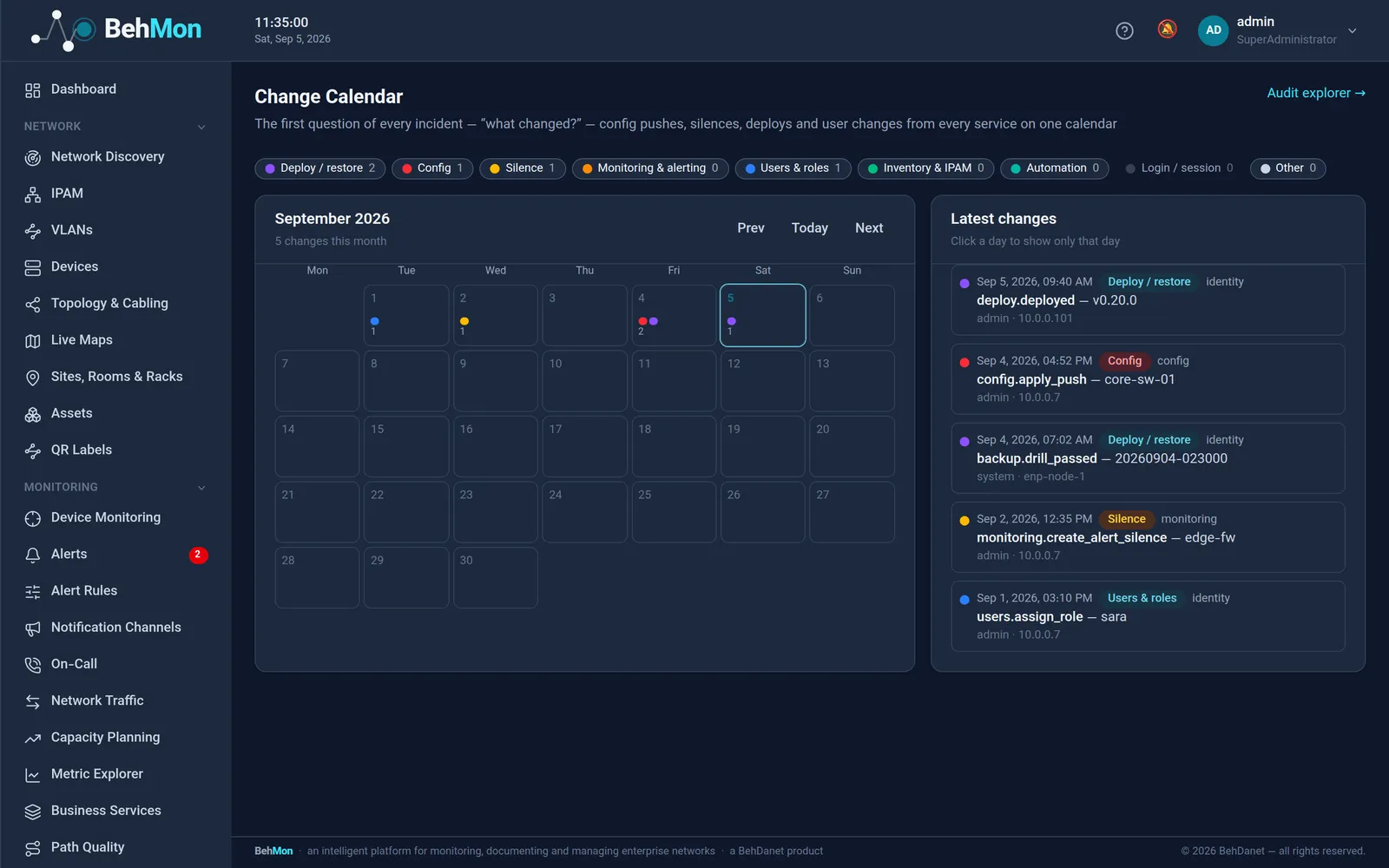
Change calendar
The first question in every incident is “what changed?”. Config pushes, alert silences, deployments and user changes sit side by side on one calendar.
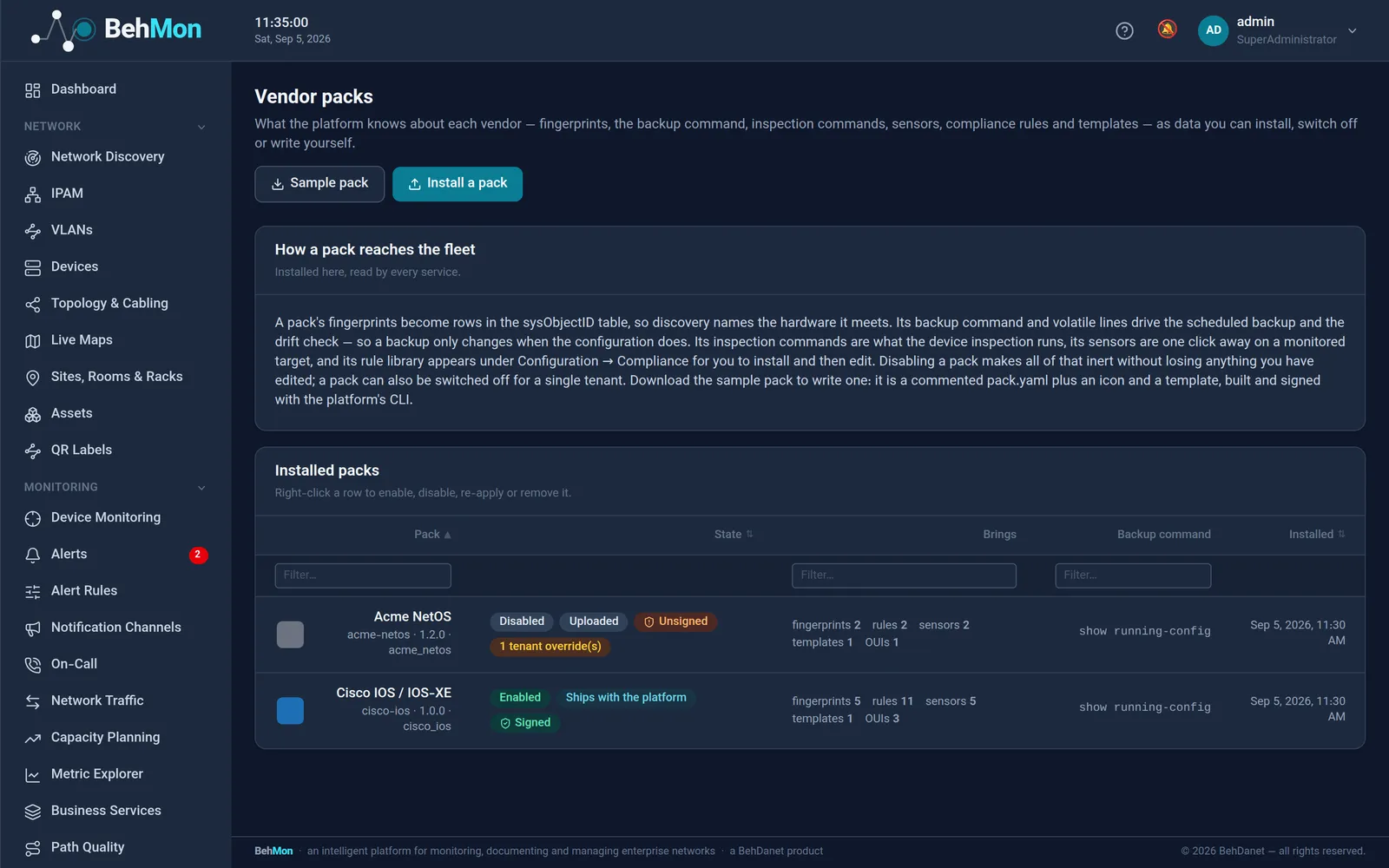
Vendor packs: a new brand without a new release
Everything the platform knows about a vendor — which sysObjectID is which model, the command that dumps a configuration, the lines of that dump that are noise, the SNMP objects worth charting, what “hardened” means — is a file now, not code.
Seven packs ship in the box: Cisco IOS/IOS-XE, Cisco NX-OS, MikroTik RouterOS, HP/Aruba, Huawei VRP, Fortinet FortiOS and Juniper Junos
Every file in a pack is signed: an unsigned pack installs and is marked so, a badly signed one is refused
Switch a pack on installation-wide or for one organisation only
The same pack drives the scheduled backup, the drift check, device inspection, the sensors and the compliance library
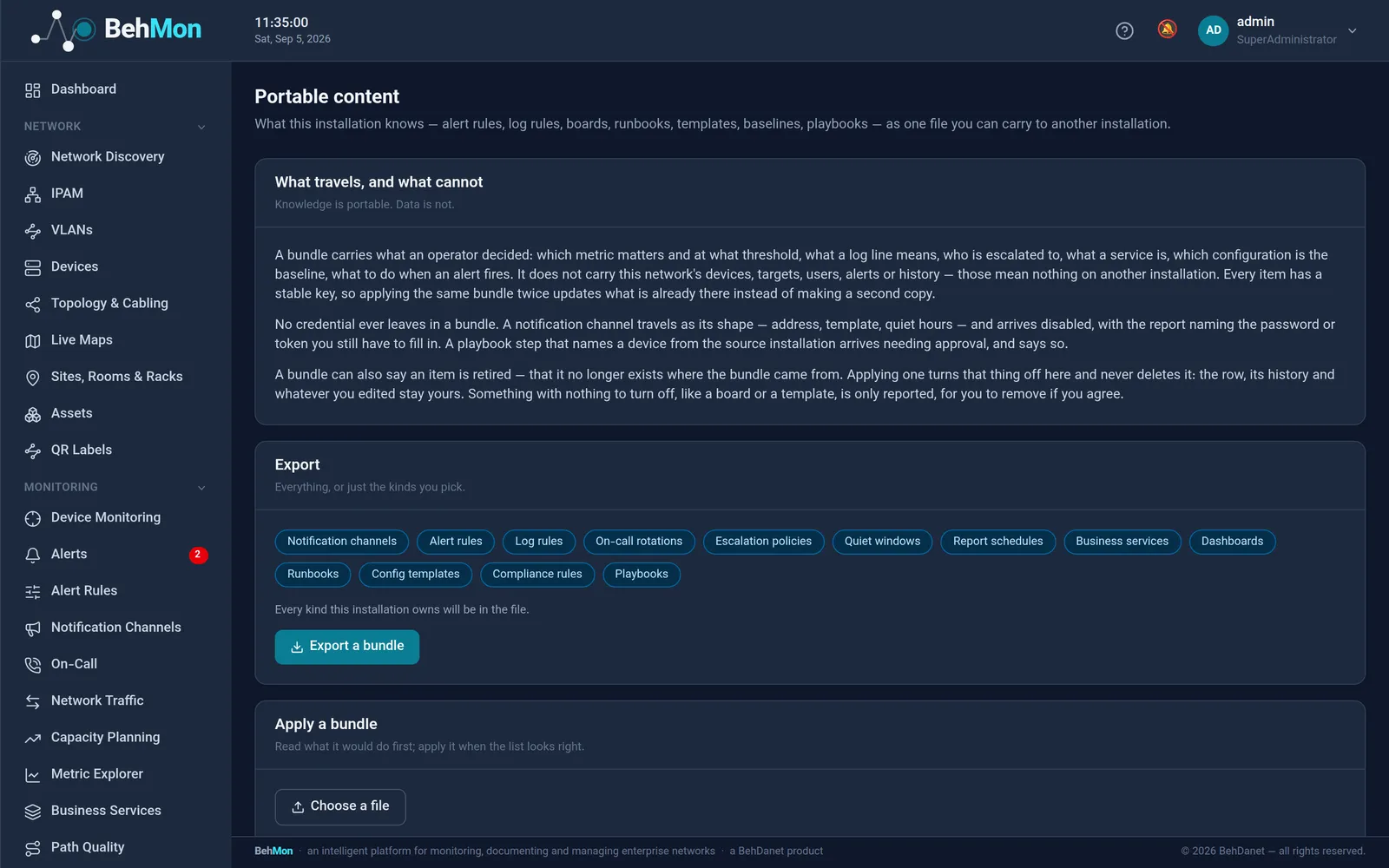
Knowledge that travels between installations
The data is this installation's, but what an operator decided — thresholds, log rules, rotations, dashboards, runbooks, templates — is a portable file.
Thirteen portable kinds in one standard bundle; references travel by key, not by internal id
A dry run before every import, item by item: created, updated, retired, skipped or failed, each with its reason
Importing the same bundle again updates what the first import created instead of duplicating it
No credential is ever in a bundle: a channel arrives disabled, and the report names the secret you have to supply
A starter pack ships in the box — CPU/memory/disk rules, log rules, a NOC board, runbooks and a template. For an MSP that is the whole “one reference installation, ten customers” story
behmon.local/vendor-packs
Vendor packs with signature status and where each is switched on
behmon.local/content
Portable content: the import dry run, item by item
behmon.local/changes
Change calendar: configs, deploys and silences in one view
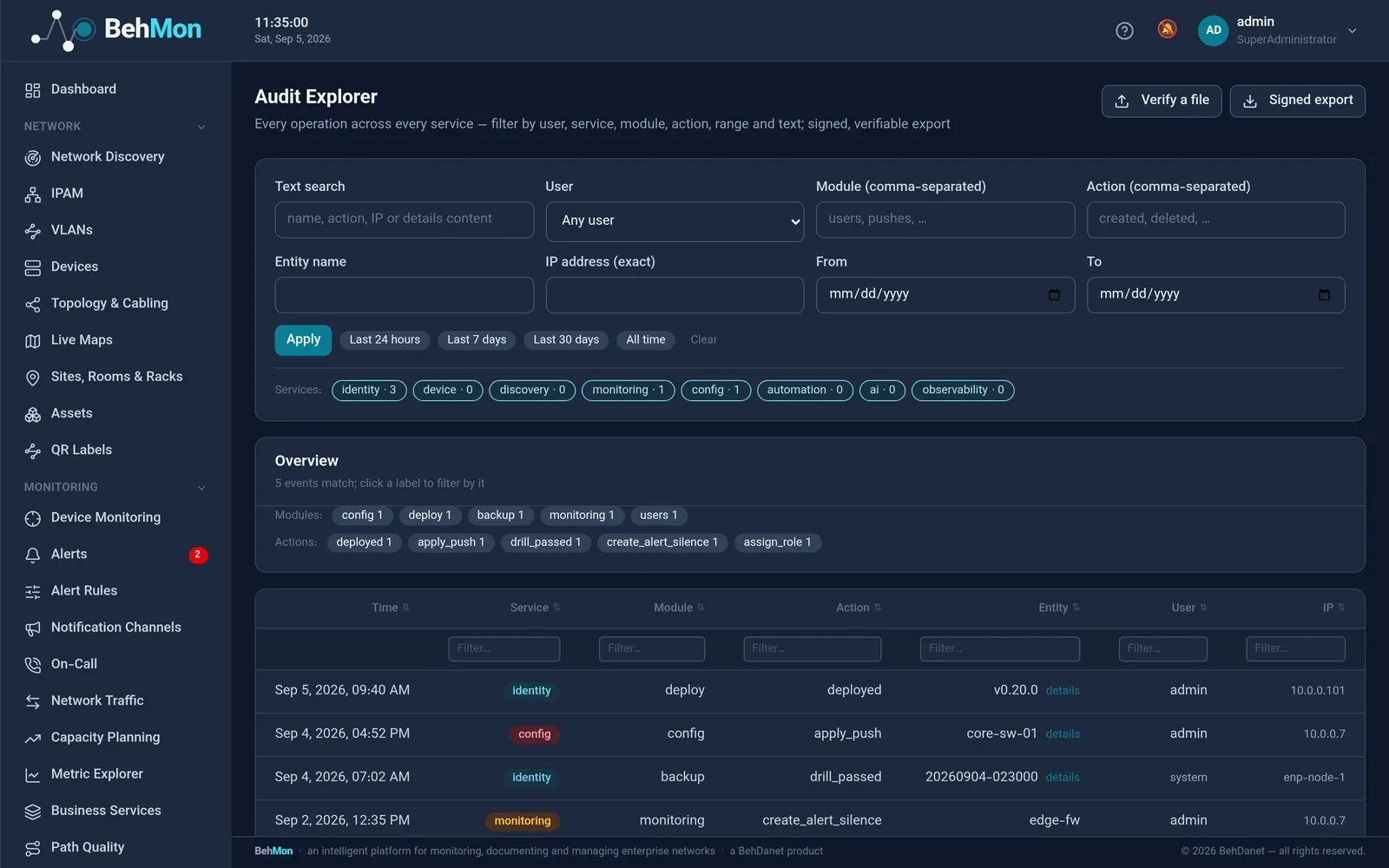
behmon.local/audit
Audit explorer with signed, verifiable exports
Frequently asked questions
Which devices can be backed up?
Devices reachable over SSH or Telnet. Seven vendor packs ship in the box: Cisco IOS/IOS-XE, Cisco NX-OS, MikroTik RouterOS, HP/Aruba, Huawei VRP, Fortinet FortiOS and Juniper Junos. The protocol follows each device's stored credential.
What if our vendor isn't on the list?
Supporting another vendor is a vendor pack: a signed file installed from the panel, with no new software release needed. The tools to build and verify one ship with the product, and our team also prepares packs to order.
Does BehMon change device configurations on its own?
Only when you ask it to, and always with four-eyes approval. Nothing is pushed without a proposal, a second user's approval and a full transcript.